Rechercher dans ce blog

Wednesday, September 2, 2020

Send Relief among groups fighting global hunger during COVID-19 - Kentucky Today

send.indah.link

By DIANA CHANDLER, Baptist Press

ALPHARETTA, Ga. (BP) – Send Relief is among compassion ministries responding to hunger concerns in the U.S. and globally which have been exacerbated by the COVID-19 pandemic.


The Southern Baptist compassion ministry has helped an estimated 700,000 people or more in 60 countries since the pandemic began, Send Relief told Baptist Press.


“Hundreds of millions of people around the world were already suffering from hunger and malnutrition even before COVID-19, but the pandemic has turned this into a massive human crisis,” Send Relief President Bryant Wright said. “Responding to food needs is a priority for us at Send Relief, and we’re so thankful for the help and incredible generosity of Southern Baptist churches.”


Among its numerous outreaches, Send Relief responded to families in need in the U.S. and Puerto Rico, and in Beirut after the Aug. 4 explosion, coordinating work through Send Relief ministry centers and with ministry partners and churches.


According to the Food and Agricultural Organization of the UN (FAO), supply chain interruptions and increased consumer demand have increased food costs and exacerbated the severity of food insecurity for 820 million people. Child hunger and malnutrition were expected to rise as school closures impacted 1 billion children, the U.S. Global Leadership Coalition reported in July, including 85 million in Latin America and the Caribbean and 9 million in South Africa.


International agencies including UNICEF, the World Health Organization (WHO), the United Nations World Food Program, the FAO and others have tracked hunger and food insecurity in several countries and regions. Numbers increasingly show that dire predictions issued last spring are becoming reality.


The World Food Program estimates an 82 percent increase in acute hunger in the 80 countries it serves in the Caribbean, Latin America, Africa, Europe and Asia, totaling around 270 million people. Based on factors including countries requesting aid, the World Food Program reported in July a 200 percent increase in food vulnerability in Latin America, a 135 percent increase in West and Central Africa, and a 90 percent increase in Southern Africa. In response, the agency said it hopes to provide aid to 138 million people this year, up from 97 million in 2019.


The World Food Program identified 27 “acute food insecurity hotspots” – countries at risk of deteriorating food conditions through 2020. The list included Haiti, Guatemala, Honduras, El Salvador, Nicaragua, Venezuela, Somalia, South Sudan, Ethiopia, Nigeria, Sierra Leone, Liberia, Burkina Faso, Mali, Niger, Cameroon, Zimbabwe, Mozambique, Central African Republic, Democratic Republic of the Congo, Yemen, Syrian Arab Republic, Sudan, Iraq, Lebanon, Afghanistan and Bangladesh.


The FAO Regional Office for Asia and the Pacific convened a four-day virtual conference of 46 nations Tuesday (Sept. 1) focused on tackling regional hunger during the pandemic.


Based on numerous reports, global hunger was on the rise before COVID-19. Africa suffers the highest levels of food insecurity, but the highest increases are occurring in Latin America and the Caribbean, driving global food insecurity from 22.9 percent in 2014 to 31.7 percent in 2019, according to The State of Food Security and Nutrition in the World, a joint report from five agencies including UNICEF, the World Food Program, the FAO.


Of 2 billion people who were food insecure in 2019, 1.03 billion are in Asia, 675 million are in Africa, 205 million are in Latin America and the Caribbean, 88 million are in North America and Europe, and 5.9 million are in Oceania.

The Link Lonk


September 02, 2020 at 09:25AM
https://www.kentuckytoday.com/stories/send-relief-among-groups-fighting-global-hunger-during-covid-19,27740?

Send Relief among groups fighting global hunger during COVID-19 - Kentucky Today

https://news.google.com/search?q=Send&hl=en-US&gl=US&ceid=US:en

James Asks Commissioners to Send Message with Resolution: Fails on Motion - SweetwaterNOW.com

send.indah.link

SWEETWATER COUNTY — The Sweetwater County Commissioners failed to pass a resolution Tuesday regarding health care autonomy, pursuant to the Wyoming Constitution, amid the COVID-19 Coronavirus pandemic due to lack of second on the motion.

District 13 Senator Tom James brought forth the resolution, in hopes of sending a clear message to both the residents of Sweetwater County and the Wyoming Legislature that Sweetwater County is “united”.

“This shows on paper that you’re united,” James said. “It shows I have the support of our county when I go to Cheyenne.”

Advertisement - Story continues below...

James claimed the purpose of the resolution was to honor the Constitution of the State of Wyoming Article 1, Declaration of Rights, Section 38(a) providing that “Each competent adult shall have the right to make his or her own health care decisions…”

James said government mandates concerning COVID-19 have “arguably resulted in social ills including increased unemployment, business closures, suicides, poverty, domestic abuse, homelessness, and alcohol and drug abuse.”

The resolution stated that if signed, the commissioners would refrain from county-level, virus-related mandates including, but not limited to, mandatory mask requirements, mandatory contact tracing, and mandatory social distancing.

However, the resolution was non-binding, meaning the resolution was a statement of support rather than a legal obligation to uphold.

Several Sweetwater County residents sent in comments in both support and opposition to the resolution. While some agreed that the county should send promise to protect the residents’ rights to make their own health care decisions, others argued that while that may be a right, with a contagious virus those personal decisions affect more than the person making them.

James said Goshen County has passed this very resolution, but was unsure of any other counties who have considered it. Commissioner Roy Lloyd said Campbell County did hear the resolution and chose not to pass it.

While the commissioners agreed with the sentiment of allowing residents to make their own health care decisions, a few commissioners had some issues with the resolution.

Concerns

Message to Private Businesses

While considering the resolution, Commissioner Lloyd asked Senator James if he had spoken with any other Wyoming legislators about the resolution, and if so, what their position was. James said he had not had the chance to discuss the issue with any other elected officials.

However, Harold Bjork, co-presenter of the resolution, said he had spoken with other legislators about it and that they were in support, though he said he could not provide names at the time and needed to “look through his emails” to verify who they were.

Commissioner Lauren Schoenfeld said she had spoken to three legislators last week about the resolution, who had all expressed concerns about it.

One of the major concerns was that it would send the wrong message to private businesses who have enforced their mandates. The concern is that those private businesses would not feel supported by the county.

Constitutional Law

Commissioner Schoenfeld also asked if there was an issue with only considering one part of the Wyoming Constitution Article 1, Declaration of Rights, Section 38, Right of health care access.

Sweetwater County Deputy Attorney John DeLeon said there are two parts of Article 1 Section 38 that should be noted, including a “rights component” and a “legislative component”. Those components are as follows:

(a) Each competent adult shall have the right to make his or her own health care decisions. The parent, guardian or legal representative of any other natural person shall have the right to make health care decisions for that person.

(c) The legislature may determine reasonable and necessary restrictions on the rights granted under this section to protect the health and general welfare of the people or to accomplish the other purposes set forth in the Wyoming Constitution.

Commissioner Schoenfeld noted that she does support the Constitutional right for people to make their own decisions in regards to health care, but that the commission also has a responsibility to support what the law says as a “general wellness for our community”.

Resolution Language

Senator James and Bjork said the intent of the resolution was to give a voice to the county residents as well as assurance them.

“It’s about giving our people a voice that’s representing them rather than giving them mandates and recommendations,” James said.

Therefore, they said the resolution was meant to send a message rather than hold the commissioners to a legal obligation. However, DeLeon said the wording in the resolution left the intent up to interpretation. The wording he is specifically talking about is:

“To notify the public of its intent to refrain from any county-level virus-related mandate concerning individual health care decisions, including but not limited to mandatory mask requirements, mandatory contact tracing and mandatory social distancing.”

DeLeon said from a legal point of view, it is important that there are mechanisms available to honor any state-wide mandates.

“We’re currently in the 11th continuation of the state health orders, and so to be able to have all those mechanisms available is important,” DeLeon said.

When the county was deciding whether to require face coverings in county buildings or not, the Sweetwater County Attorney’s Office’s recommendation was to not include any wording in the resolution that would make face coverings mandatory. Rather, they suggested they make face coverings a recommendation.

DeLeon said the Attorney’s Office’s stance remains the same in this resolution and the wording should provide a recommendation. He said the wording could be changed from “refrain” to express the intended message.

Supporting Constitutional Rights

Commissioner Wally Johnson spoke in favor of the resolution as written, noting that it is their responsibility as elected officials to show their support. He said they took a stance on the second amendment, in which they declared Sweetwater County a Second Amendment Sanctuary County, and now it is time to show support for this Constitutional right.

“I think the people need to know where we stand on these things,” Johnson said.

Commissioner Lloyd said he supports the intent of the resolution but questioned whether it was necessary, as he believes the county has already sent this message through policy and procedure during their face coverings discussions.

“We’ve already kind of taken this stance without a resolution,” Lloyd said.

Commissioner Schoenfeld also pointed out that the county commissioners don’t have control over what the Sweetwater County health officials or doing, or what the state health officials are doing.

Commissioner Johnson posed the question of whether the state health officials have more authority than the governor, and if the county health officials have more authority than the county commissioners.

“I don’t believe they do or that they should,” Johnson said.

Johnson then moved to approve the resolution as written. No commissioner seconded the motion, therefore the resolution failed.

The Link Lonk


September 02, 2020 at 05:26AM
https://www.sweetwaternow.com/james-asks-commissioners-to-send-message-with-resolution-fails-on-motion/

James Asks Commissioners to Send Message with Resolution: Fails on Motion - SweetwaterNOW.com

https://news.google.com/search?q=Send&hl=en-US&gl=US&ceid=US:en

Tuesday, September 1, 2020

Should I Send My Kids Back to School? A Parent’s Toughest Call - The New York Times

send.indah.link

All summer, as information about how the coronavirus affects children has trickled in, I’ve been updating a balance sheet in my head. Every study I read, every expert I talked to, was filling in columns on this sheet: reasons for and against sending my children back to school come September.

Into the con column went a study from Chicago that found children carry large amounts of virus in their noses and throats, maybe even more than adults do. Also in the con column: two South Korean studies, flawed as they were, which suggested children can spread the virus to others — and made me wonder whether my sixth-grader, at least, should stay home.

Reports from Europe hinting that it was possible to reopen schools safely dribbled onto the pro side of my ledger. But could we match those countries’ careful precautions, or their low community levels of virus?

I live in Brooklyn, where schools open after Labor Day (if they open this year at all), so my husband and I have had more time than most parents in the nation to make up our minds. We’re also privileged enough to have computers and reliable Wi-Fi for my children to learn remotely.

But as other parents called and texted to ask what I was planning to do, I turned to the real experts: What do we know about the coronavirus and children? And what should parents like me do?

The virus is so new that there are no definitive answers as yet, the experts told me. Dozens of coronavirus studies emerge every day, “but it is not all good literature, and sorting out the wheat from the chaff is challenging,” said Dr. Megan Ranney, an expert in adolescent health at Brown University.

But she and other experts were clear on one thing: Schools should only reopen if the level of virus circulating in the community is low — that is, if less than 5 percent of people tested have a positive result. By that measure, most school districts in the nation cannot reopen without problems.

“The No. 1 factor is what your local transmission is like,” said Helen Jenkins, an expert in infectious diseases and statistics at Boston University. “If you’re in a really hard-hit part of the country, it’s highly likely that somebody coming into the school will be infected at some point.”

On the questions of how often children become infected, how sick they get and how much they contribute to community spread, the answers were far more nuanced.

In the early days of the pandemic, there were so few reports of sick children that it was unclear whether they could be infected at all. Researchers guessed even then that younger children could probably catch the coronavirus, but were mostly spared severe symptoms.

That conjecture has proved correct. “There is very clear evidence at this point that kids can get infected,” Dr. Ranney said.

As the pandemic unfolded, it also appeared that younger children were less likely — perhaps only half as likely — to become infected, compared with adults, whereas older children had about the same risk as adults.

But it’s impossible to be sure. In most countries hit hard by the coronavirus, lockdowns and school shutdowns kept young children cloistered at home and away from sources of infection. And when most of those countries opened up, they did so with careful adherence to masks and physical distancing.

Image
Credit...Ethan Miller/Getty Images

Children may turn out to be less at risk of becoming infected, “but not meaningfully different enough that I would take solace in it or use it for decision making,” said Dr. Ashish Jha, dean of the Brown University School of Public Health.

In the United States, children under age 19 still represent just over 9 percent of all coronavirus cases. But the number of children infected rose sharply this summer to nearly half a million, and the incidence among children has risen much faster than it had been earlier this year.

“And those are just the kids that have been tested,” said Dr. Leana Wen, a former health commissioner of Baltimore. “It’s quite possible that we’re missing many cases of asymptomatic or mildly symptomatic children.”

In the two-week period between Aug. 6 and Aug. 20, for example, the number of children diagnosed in the United States jumped by 74,160, a 21 percent increase.

“Now that we’re doing more community testing, we’re seeing higher proportions of children who are infected,” Dr. Ranney said. “I think that our scientific knowledge on this is going to continue to shift.”

Even with the rising number of infections, the possibility that panics parents the most — that their children could become seriously ill or even die from the virus — is still reassuringly slim.

Children and adolescents up to age 20 (definitions and statistics vary by state) represent less than 0.3 percent of deaths related to the coronavirus, and 21 states have reported no deaths at all among children.

“That remains the silver lining of this pandemic,” Dr. Jha said.

But reports in adults increasingly suggest that death is not the only severe outcome. Many adults seem to have debilitating symptoms for weeks or months after they first fall ill.

“What percentage of kids who are infected have those long-term consequences that we’re increasingly worried about with adults?” Dr. Ranney wondered.

Multisystem inflammatory syndrome, a mysterious condition that has been linked to the coronavirus, has also been reported in about 700 children and has caused 11 deaths as of Aug. 20. “That’s a very small percentage of children,” Dr. Ranney said. “But growing numbers of kids are getting hospitalized, period.”

Transmission has been the most challenging aspect of the coronavirus to discern in children, made even more difficult by the lockdowns that kept them at home.

Because most children are asymptomatic, for example, household surveys and studies that test people with symptoms often miss children who might have seeded infections. And when schools are closed, young children don’t venture out; they tend to catch the virus from adults, rather than the other way around.

To confirm the direction of spread, scientists ideally would genetically sequence viral samples obtained from children to understand where and when they were infected, and whether they passed it on.

“I keep saying to people, ‘It’s so hard to study transmission — it’s just really, really hard,’” Dr. Jenkins said.

Still, based on studies so far, “I think it still appears that the younger children might be less likely to transmit than older ones, and older ones are probably more similar to adults in that regard,” she said.

Sadly, the high numbers of infected children in the United States may actually provide some real data on this question as schools reopen.

Credit...Luke Gronneberg/The Daily News, via Associated Press

That’s a tough one to answer, as parents everywhere now know. So much depends on the particular circumstances of your school district, your immediate community, your family and your child.

“I think it’s a really complex decision, and we need to do everything we can as a society to enable parents to make this type of decision,” Dr. Wen said.

There are some precautions everyone can take — beginning with doing as much outdoors as possible, maintaining physical distance and wearing masks.

“I will not send my children to school or to an indoor activity where the children are not all masked,” Dr. Ranney said.

Even if there is uncertainty about how often children become infected or spread the virus, “when you consider the risk versus benefit, the balance lies in assuming that kids can both get infected and can spread it,” Dr. Ranney said.

For schools, the decision will also come down to having good ventilation — even if that’s just windows that open — small pods that can limit how widely the virus might spread from an infected child, and frequent testing to cut transmission chains.

Teachers and school nurses will also need protective equipment, Dr. Jenkins said: “Good P.P.E. makes all the difference, and school districts must provide that for the teachers at an absolute minimum.”

As long as these right precautions are in place, “it’s better for kids to be in school than outside of school,” Dr. Jha said. “Teachers are reasonably safe in those environments, as well.”

But community transmission is the most important factor in deciding whether children should go back to school, researchers agreed. “We just can’t keep a school free from the coronavirus if the community is a hotbed of infection,” Dr. Wen said.

In New York, the numbers are low enough that my husband and I have a real choice to make. And our children’s school, with a focus on social equity, has said children of frontline workers and those with disabilities will get the first spots for in-person learning.

We qualified for two days a week of schooling in person. My mother-in-law lives downstairs in a separate unit and may be more vulnerable to the virus. But my children, who are 11 and 8, need to learn in person and are desperate to see their friends. We’ve decided to send our children back to school.

The Link Lonk


September 01, 2020 at 08:00PM
https://www.nytimes.com/2020/09/01/health/coronavirus-parents-schools.html

Should I Send My Kids Back to School? A Parent’s Toughest Call - The New York Times

https://news.google.com/search?q=Send&hl=en-US&gl=US&ceid=US:en

Update: Harris County Will Only Send Ballots To Voters 65 And Older For Now, After Texas Attorney General Sues - Houston Public Media

send.indah.link
Texas Attorney General Ken Paxton in 2016.

Updated 6:45 p.m. CT: Harris County Clerk Chris Hollins will only send applications for mail-in ballots to voters 65 and older, after being sued by Texas Attorney General Ken Paxton over a plan to send applications to every voter in the county, KHOU reported Tuesday. Hollins said the change was made pending the results of a lawsuit, and told KHOU, “the law is on (the county’s) side on this, and we’re going to have our day in court, plain and simple.”

Our original story is below:

Texas Attorney General Ken Paxton on Tuesday addressed a pair of ongoing court battles over mail-in ballots, including a Harris County initiative he argued would lead to an uptick in voter fraud.

Paxton is suing Harris County over the county's plan to send mail-in ballot applications to all registered voters, arguing that in doing so, the county clerk is breaking Texas election law.

The attorney general told Houston Matters host Craig Cohen on Tuesday that the Texas Election Code bars Harris County Clerk Chris Hollins from mass mailing vote-by-mail applications.

“He has no authority under the law to send out applications,” Paxton said. “It's not his job. If somebody requests it – that's what the law says – if somebody requests it, he can do it. But he can't just decide, ‘I'm just going to send out millions of ballots and spend millions of dollars.' It's not within his authority to do that.”

In his email announcing the lawsuit, Paxton said that, "The Harris County Clerk's proposed mass mailing would sow confusion because applications would go to all registered voters, regardless of whether they legally qualify to vote a mail ballot and regardless of whether they even want to vote by mail."

The announcement of the lawsuit came just before Hollins made an appearance on Town Square With Ernie Manouse, where he said providing forms and information is part of his office’s job.

"I think we believe the exact opposite," Hollins said, "that by giving people information and educational materials, that you actually clear up any confusion and actually educate voters and empower them to use their rights and to vote in the way that's most safe and convenient for them."

Hollins also stressed that his office is not mailing out ballots themselves, but ballot applications — something the Texas Secretary of State provides for free on its own website.

"We're not just wreckessly sending out ballots across Harris County,” Hollins added. “We're sending out information, along with information about who should and who shouldn't apply."

Paxton responded on Houston Matters that there was nothing prohibiting Hollins from sending out information and educational materials. But, he said, the Texas Election Code barred Hollins from sending out applications unless voters specifically requested them.

In justifying the decision to sue the county, Paxton asserted that expanding access to voting by mail would open the door to voter fraud. When pressed on the issue, Paxton was unable to state how many cases of voter fraud his office had successfully prosecuted this year.

The attorney general also addressed an ongoing federal court battle over mail-in voting, in which the Texas Democratic Party sued the state over an election rule that limits mail-in ballots to those over 65, saying it constitutes age discrimination.

Paxton called that argument “ludicrous,” and insisted that the Texas Legislature intended to limit the number of people who could vote by mail.

Everyone else, he said, still had the right to vote in person.

"Anybody can vote,” he said. “Everybody…over 18, unless they fall within certain categories of being a felon, can vote."

But in a statement Monday after oral arguments in the 5th U.S. Circuit Court of Appeals, Texas Democratic Party General Counsel Chad Dunn said the state’s position violates the 26th Amendment — especially amid the COVID-19 pandemic, in which many people feel it is unsafe to leave the house.

"Voting by mail is not controversial in 45 other states,” Dunn said, arguing that even President Donald Trump has endorsed a form of voting by mail: absentee ballots.

"Texas insists though it should be one of a handful of states that have limited voting-by-mail to age,” Dunn said. “The 26th Amendment was adopted in 1971 for the purpose of prohibiting denial or abridgment of the right to vote on the basis of age. Today, we simply asked the Court to ensure that Constitutional right in time for this next presidential election, especially as these pandemic circumstances continue."

Subscribe to Today in Houston

Fill out the form below to subscribe our new daily editorial newsletter from the HPM Newsroom.

The Link Lonk


September 02, 2020 at 03:25AM
https://www.houstonpublicmedia.org/articles/news/politics/2020/09/01/380954/paxton-charges-hollins-with-breaking-texas-election-law/

Update: Harris County Will Only Send Ballots To Voters 65 And Older For Now, After Texas Attorney General Sues - Houston Public Media

https://news.google.com/search?q=Send&hl=en-US&gl=US&ceid=US:en

Lawmakers send governor bill curtailing his powers - Toledo Blade

send.indah.link
MENU
  • Facebook Messenger Icon

ACCOUNT

SECTIONS

OTHER

CLASSIFIEDS

CONTACT US / FAQ

The Link Lonk


September 02, 2020 at 04:40AM
https://www.toledoblade.com/local/Coronavirus/2020/09/01/Lawmakers-send-governor-bill-curtailing-his-powers/stories/20200901127

Lawmakers send governor bill curtailing his powers - Toledo Blade

https://news.google.com/search?q=Send&hl=en-US&gl=US&ceid=US:en

Mnuchin: We Want To Extend Unemployment Insurance And Send Out More Stimulus Checks - Forbes

send.indah.link

TOPLINE

During his testimony before a House subcommittee investigating the federal response to the coronavirus crisis, Treasury Secretary Steven Mnuchin said that he supports extending enhanced unemployment benefits as well as sending out a second round of economic impact payments, describing both benefits as “critical to the economic recovery” even as he defended the Trump administration’s use of executive actions to “provide critical relief.”

KEY FACTS

A $600 per week federal unemployment supplement expired at the end of July, and a new program (established via executive order by President Trump) that would send a $300 weekly federal supplement hasn’t yet begun in most states; the funds for the new program are also expected to dry up in a matter of weeks. 

The President doesn’t have the ability to authorize new spending for either stimulus checks or unemployment benefits, but Congress does. 

Both Democrats and Republicans have included a second round of stimulus payments in their proposed legislation, but disagreements over the other pieces of the bill—including enhanced unemployment and more aid to state and local governments—have prevented any proposal from becoming law. 

Mnuchin reiterated that he is willing to negotiate with House Speaker Nancy Pelosi (D-Calif.) “any time;” Speaker Pelosi has criticized the White House for being unwilling to compromise on the size of the bill. 

Mnuchin advocated for a faster, targeted agreement based what lawmakers agree on right now.

He also said he supported a piecemeal approach that could include multiple bills rather than a single piece of legislation (something that Pelosi has strongly opposed): “we’ve done multiple deals before, we can do multiple deals again,” he said.

Crucial quote

"We will continue to work with the Senate and House on a bipartisan basis for a phase four relief package,” Mnuchin said. “I believe a bipartisan agreement still should be reached.”

Key background 

The Treasury Secretary’s hearing comes as negotiations between Democratic leaders and the Trump administration over the next round of federal coronavirus aid have been stalled for weeks. White House chief of staff Mark Meadows told CNBC on Tuesday that the biggest obstacle preventing a deal is more federal aid money for state and local governments. Democrats are pushing for about $1 trillion for states and cities alone (that’s the size of the GOP’s entire original proposal) but the White House and Republicans are only prepared to support about $150 billion in new aid. 

Tangent

Senate Republican Conference Chairman John Barrosso (R-Wyo.) said Tuesday that the GOP hopes to vote on a new “skinny” coronavirus relief bill next week—but even if the $500 billion package is approved by Republicans, it still falls short by more than $1.5 trillion when compared with the $2.2 trillion compromise Democrats have offered. While that bill will reportedly include more enhanced unemployment insurance at a reduced rate, it will not include another round of stimulus checks.

Further reading

Trump Willing To Sign $1.3 Trillion Coronavirus Stimulus Bill, Chief Of Staff Says (Forbes)

Pelosi Says Democrats Are ‘Not Budging’ As Second Stimulus Gridlock Wears On (Forbes)

The Fed Just Announced A Major Inflation Policy Change—Here’s Why That Matters (Forbes)

$300 Weekly Unemployment Payments Are ‘Too Little Too Late’ To Prop Up August Spending, Goldman Sachs Says (Forbes)

The Link Lonk


September 02, 2020 at 01:41AM
https://www.forbes.com/sites/sarahhansen/2020/09/01/mnuchin-we-want-to-extend-unemployment-insurance-and-send-out-more-stimulus-checks/

Mnuchin: We Want To Extend Unemployment Insurance And Send Out More Stimulus Checks - Forbes

https://news.google.com/search?q=Send&hl=en-US&gl=US&ceid=US:en

Coronavirus: Fremont siblings send cards thanking health care worker heroes - The Mercury News

send.indah.link

By LUIS ANDRES HENAO | The Associated Press

Every day on every news channel, teenage siblings Prabhleen and Mantej Lamba watched the sacrifices of medical workers around the world who risk their physical and mental health on the front lines of the coronavirus pandemic.

“We were really moved by this,” said Prabhleen, 15, “and we knew that we had to involve our community and take action.”

So in the spirit of the Sikh faith’s core principle of “seva,” or selfless service, the San Francisco Bay area teens launched an initiative they called Cards 4 Covid Heroes to let health care workers know how much they’re appreciated.

In just two months, they’ve collected more than 250 thank you cards from members of the community, mailed to their home in the suburban city of Fremont. Then they’ve sent them to workers at four hospitals — each along with a $10 VISA gift card.

The handwritten cards are often decorated with hearts, flowers, stars. One had a drawing of a hospital with the phrase, “Heroes work here.” Girl Scout Troop 31164’s message: “Thank you for going to work every day and being there when we need it the most.”

The teens also created an e-card option that lets people go online and fill out a Google form. They then print out the message submitted there on a template that the siblings created. One of the cards pictures doctors and nurses donning capes and an image of Spider-Man with a stethoscope.

“During these times of darkness and uncertainty, we just wanted to try to shine some light on the fact that we do have true heroes working on the front lines who are trying their hardest to save people’s lives,” said Mantej, 17.

So far Prabhleen and Mantej have sent cards to the UC Davis Medical Center, the Los Angeles Community Hospital, the Zuckerberg San Francisco General Hospital and Trauma Center and the Chandler Regional Medical Center in Arizona.

For the first two weeks, they drew on friends and family for support, but then they started a GoFundMe page to collect donations and buy more cards.

The feedback has been rewarding.

“We received pictures from the health care workers, and we can just see from their faces that a small nod of encouragement with a small $10 gift card can go a long way to encourage them and to help them get through the difficult days,” Prabhleen said.

“They know that, ’OK, we’re not alone. And there are people who do support us and care for us,’” she said.

___

While nonstop news about the effects of the coronavirus has become commonplace, so, too, have tales of kindness. “One Good Thing” is a series of AP stories focusing on glimmers of joy and benevolence in a dark time. Read the series here: https://apnews.com/OneGoodThing

___

Associated Press religion coverage receives support from the Lilly Endowment through the Religion News Foundation. The AP is solely responsible for this content.

The Link Lonk


September 01, 2020 at 08:04PM
https://www.mercurynews.com/teen-siblings-send-cards-thanking-health-care-worker-heroes

Coronavirus: Fremont siblings send cards thanking health care worker heroes - The Mercury News

https://news.google.com/search?q=Send&hl=en-US&gl=US&ceid=US:en

Featured Post

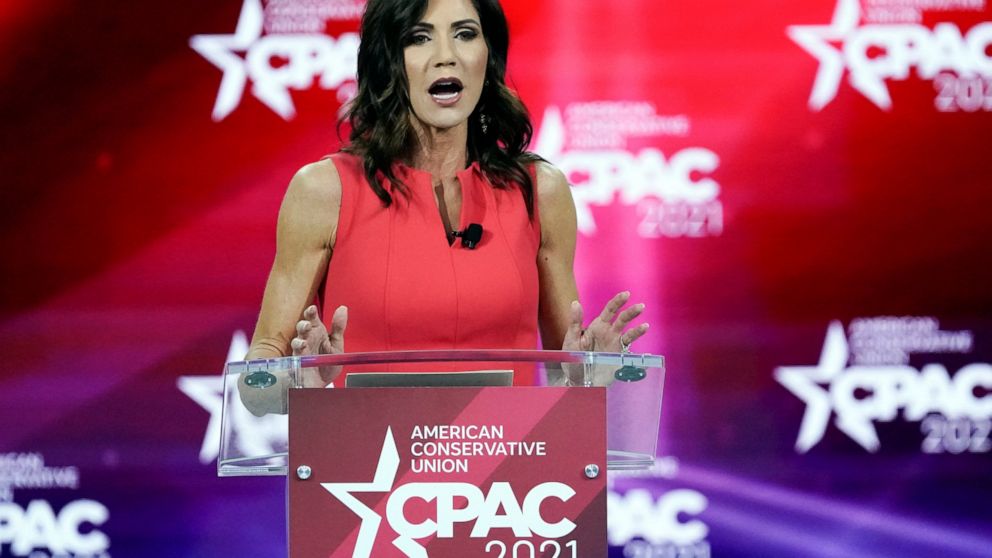
South Dakota to send National Guard troops to Texas - ABC News

send.indah.link South Dakota Gov. Kristi Noem says she will join a growing list of Republican governors sending law enforcement officers...

Popular Posts